1. The Dawn of Photographic Printing: Chemical Processes of the 19th Century

1.1. Daguerreotype: The First Step Toward Photography
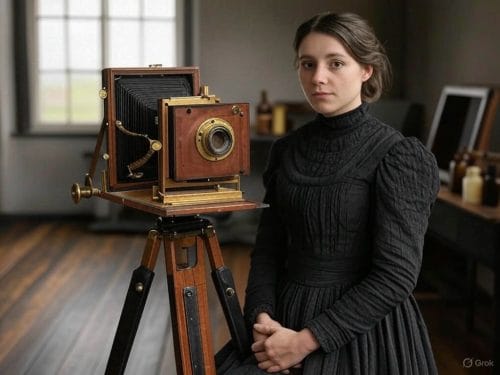
The history of photographic printing begins in 1839 when Louis Daguerre introduced the daguerreotype, the first commercially successful photographic technology. Daguerreotypes were created on polished copper plates coated with silver. The surface was treated with iodine vapors to become light-sensitive, then fixed after exposure using mercury and a saline solution. The resulting images were astonishingly detailed (equivalent to modern 20–30 megapixel resolution) but were one-of-a-kind, as reproduction was impossible.
Technical limitations of daguerreotypes included long exposure times (10 seconds to several minutes), making portraiture challenging, and high costs. For instance, in the 1840s, a single daguerreotype in Paris cost about 25 francs—equivalent to a worker’s monthly wage. Despite this, the technology rapidly spread across Europe and America, becoming a symbol of a new visual era. Daguerreotypes were used for portraits, landscapes, and even scientific experiments, such as John Whipple’s photograph of the Moon in 1851.
1.2. Calotype: The Birth of Reproducible Printing
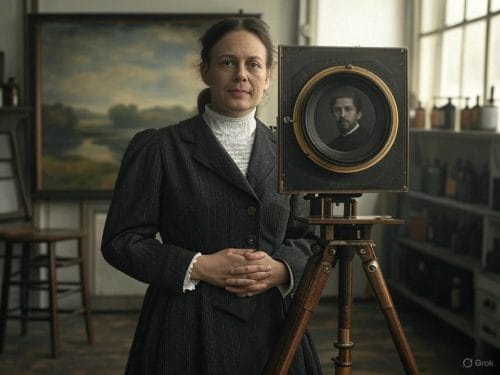
In 1841, William Henry Fox Talbot introduced the calotype, which revolutionized photographic printing. Unlike daguerreotypes, calotypes used a paper negative impregnated with silver nitrate and gallic acid. After exposure, the negative was developed, and positives were printed on salted paper. This allowed multiple copies of a single image to be produced—a critical step toward mass photography.
Calotypes had drawbacks: images were less sharp due to the paper’s texture, and the process was labor-intensive. For example, development required precise control of time and temperature, and the sodium thiosulfate fixer (introduced by John Herschel) was a novelty that not all photographers mastered. Nevertheless, calotypes gave rise to photojournalism and albums, such as Talbot’s The Pencil of Nature (1844–1846), the first book illustrated with photographs.
1.3. Albumen Printing and Other Methods
By the mid-19th century, albumen printing became the dominant method. Egg whites were mixed with sodium chloride to create a base for a light-sensitive emulsion. Paper coated with this mixture was placed in contact with a negative and exposed to sunlight. Albumen prints were known for their warm tones and subtle gradations, making them popular for portraits and landscapes. By the 1860s, 80% of photographs in Europe were produced using this method.
Other technologies, such as the collodion process (1851), improved quality. Collodion—a sticky nitrocellulose mixture—was applied to glass plates, creating sharp negatives. This method was used during the U.S. Civil War for documentary photography, with prints often transferred to albumen paper. However, collodion required “wet” processing, meaning the plate had to remain moist, complicating fieldwork.
1.4. Technical and Cultural Aspects
19th-century chemical processes relied on light-sensitive silver salts that reacted to ultraviolet light. The simplified reaction formula is:
AgBr + hν → Ag + Br
where AgBr is silver bromide, and hν is the energy of a photon. Development amplified the latent image, converting exposed particles into metallic silver, while the fixer removed unexposed salts.
Culturally, 19th-century photographic printing made visual imagery more accessible but remained elitist. Studios like Nadar’s in Paris attracted celebrities, and carte-de-visite albums (portrait calling cards) became a fashionable phenomenon. However, the complexity of the processes limited mass adoption, and photographers often doubled as chemists.
2. Analog Technologies of the 20th Century: Refinement and Mass Adoption
2.1. Gelatin Silver Printing: The Standard for Black-and-White Photography
In the 1870s, gelatin silver printing replaced albumen printing. Gelatin, derived from animal tissues, became an ideal medium for holding microcrystals of silver bromide or chloride. This technology increased light sensitivity by 10–20 times compared to collodion, reducing exposure times to fractions of a second. By 1900, gelatin silver materials dominated photography.
adresse du processus d’impression comprenait plusieurs étapes :
- Exposition : le négatif était projeté sur du papier photo à travers un agrandisseur.
- Développement : des solutions chimiques (par exemple, le métol ou l’hydroquinone) amplifiaient l’image.
- Bain d’arrêt : l’acide acétique stoppait la réaction.
- Fixation : le thiosulfate de sodium éliminait les sels non exposés.
- Lavage : éliminait les résidus chimiques pour assurer la durabilité.
Gelatin silver printing provided high contrast and detail, measured in lines per millimeter (up to 100 lpm for high-quality paper). Photo paper varied in texture (glossy, matte) and weight (baryta coating), allowing photographers to experiment with aesthetics. This technology was used by masters like Ansel Adams, whose works remain benchmarks.
2.2. Chromogenic Printing: The Color Revolution
Color photography emerged in the early 20th century, but commercial success came in the 1930s. In 1935, Kodak introduced Kodachrome, a film with three emulsion layers sensitive to red, green, and blue light. During development, dyes formed to create a full-color image. In 1936, Agfa released Agfacolor, simplifying the process by integrating dyes into the emulsion.
Chromogenic printing, based on the same principles, became the standard for color prints. Photo paper contained three layers with couplers that, when reacting with the developer, formed cyan, magenta, and yellow dyes. The C-41 process, standardized in 1972, enabled automated printing in mini-labs. Color accuracy depended on balancing filters in the enlarger, requiring skill.
Chromogenic printing had drawbacks: dyes faded over time (especially under light exposure), and early prints lost quality within 10–20 years. In the 1980s, improved materials like Kodak Endura extended durability to 50 years in dark storage.
2.3. Instant Photography: Polaroid and Fuji
In 1948, Edwin Land introduced Polaroid, a camera that produced a finished print within a minute of shooting. The technology relied on diffusion transfer: after exposure, chemical reagents in the cartridge transferred the image from the negative to positive paper. The reaction was:
AgX + Red → Ag + Dye
where AgX is silver halide, and Dye is the dye migrating to the paper.
The Polaroid SX-70 (1972) simplified the process by integrating chemicals into the film. Print quality (approximately 300 dpi) was inferior to lab standards, but instantaneity made it popular among amateurs and artists like Andy Warhol. In the 1980s, Fuji introduced Instax, competing with Polaroid, and this technology saw a revival in the 21st century due to retro trends.
2.4. Challenges and Achievements
20th-century analog technologies made photographic printing mainstream. By the 1970s, mini-labs like the Kodak Minilab processed thousands of prints daily. However, the processes remained complex: chemicals required disposal, and precise color correction depended on the operator’s expertise. This spurred the transition to digital methods.
Culturally, analog printing shaped the visual aesthetics of the 20th century. Photo albums, magazine reproductions, and exhibition prints became commonplace. Photographers like Henri Cartier-Bresson used gelatin silver printing for documentary work, while color prints dominated advertising and fashion.
3. The Digital Era: Inkjet, Laser, and Sublimation Printing
3.1. Inkjet Printing: A Revolution for Home Use
In the 1980s, inkjet printing transformed photographic printing, making it accessible to amateurs. Early photo printers, like the Epson Stylus Photo (1996), used piezoelectric technology to deposit microdroplets of ink (2–6 picoliters) onto paper. Resolutions reached 1440 dpi, and by the 2000s, 5760 dpi, comparable to analog prints.
Inkjet printers operated on the principle:
Ink → nozzle Substrate
where inks (pigment or dye-based) were sprayed through nozzles 10–20 microns in diameter. Pigment inks, such as Epson UltraChrome, contained solid particles, ensuring durability up to 200 years (per Wilhelm Imaging Research tests). Dye-based inks were cheaper but faded within 10–20 years.
Photo paper was a key factor. Baryta and polymer coatings improved ink absorption, while microporous structures enabled instant drying. For example, Ilford Galerie Prestige paper mimicked the texture of analog prints, appealing to professionals.
ICC profiles (International Color Consortium) standardized color reproduction. Profiles described a device’s color space (e.g., sRGB or Adobe RGB) via LUTs (Look-Up Tables), minimizing discrepancies between screen and print. Printer calibration using spectrophotometers like the X-Rite i1 became standard.
3.2. Laser and Sublimation Printing
Laser printing, used in mini-labs (Fuji Frontier, Noritsu QSS), projected images onto chromogenic paper using RGB lasers. Resolutions reached 600 dpi, with speeds up to 1000 prints per hour. Laser systems ensured color stability but required expensive equipment.
Sublimation printing worked differently: dyes on a polymer ribbon were heated (to 300°C) and transferred to paper in a gaseous state. This produced smooth gradations, ideal for portraits. Printers like the DNP DS-RX1 became popular in photo kiosks. The drawback was limited print sizes (typically up to 6×8 inches).
3.3. Non-Standard Materials and Large-Format Printing
The digital era expanded boundaries: photographs were printed on canvas, acrylic, metal, and wood. UV printing cured inks with ultraviolet light, creating durable prints for outdoor use. For example, aluminum panels with UV printing retained vibrancy for up to 10 years in sunlight.
Large-format printers, such as the Canon imagePROGRAF, enabled prints up to 60 inches. Used for exhibitions and advertising, they supported resolutions up to 2400 dpi. The technology required precise calibration, as even a 1% color deviation was noticeable on large formats.
3.4. Cultural Shift
Digital printing democratized photography. By 2005, home printers cost as little as $100, and photo labs offered 4×6-inch prints for $0.15. This led to a boom in photobooks and personalized gifts. However, mass production reduced the perceived value of physical prints, as digital copies were easier to store.
4. 21st Century Innovations: AI, 3D Printing, and Sustainability
4.1. Artificial Intelligence in Photographic Printing
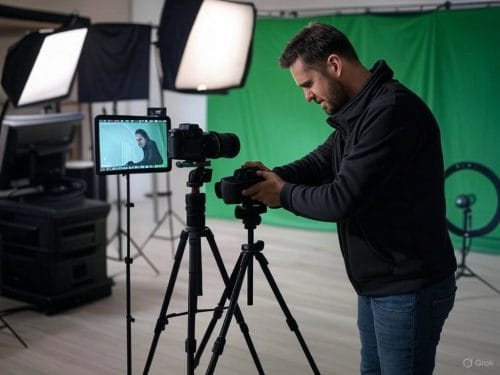
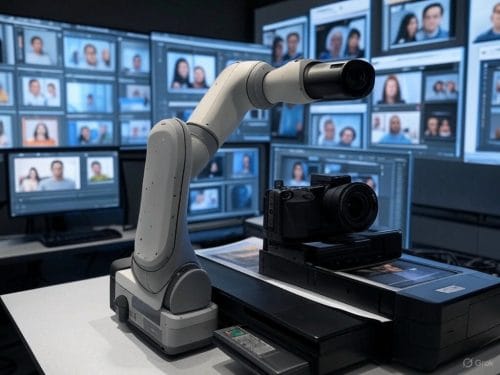
Artificial intelligence (AI) has transformed photo preparation and printing. Algorithms like Topaz Gigapixel AI upscale resolution by 4–6 times, using convolutional neural networks to reconstruct details. For example, a 2 MP image can be converted to 12 MP with minimal artifacts.
AI also automates color correction. Software like Adobe Lightroom analyzes histograms and applies LUTs to balance exposure. Some printers, such as the HP DesignJet Z9+, use built-in AI modules to optimize ink usage, reducing costs by 10–15%.
4.2. 3D Printing of Photographs
Lithophanes—relief images visible when backlit—have emerged as a new direction. A photograph is converted into a 3D model, with pixel brightness determining plastic thickness (0.5 to 3 mm). Printing is done on SLA printers (e.g., Formlabs Form 3) with 25-micron resolution. Lithophanes combine photography and sculpture, finding use in decor and memorial items.
Other experiments include holographic printing, where lasers create interference patterns for a 3D effect. These technologies are currently limited to research labs but may become commercial by 2030.
4.3. Sustainable Technologies
Sustainability is a 21st-century priority. Epson EcoTank and similar printers use high-capacity ink cartridges, reducing plastic waste by 90%. Photo paper made from bamboo or recycled cotton (e.g., Hahnemühle Bamboo) lowers the carbon footprint. Companies like Canon are developing biodegradable inks based on plant polymers.
Tests show that sustainable prints maintain durability (up to 100 years) but cost 20–30% more. This drives research into nanocellulose for paper, which could become standard by 2035.
4.4. Mobile and Social Printing
Compact printers like the Canon Selphy CP1500 and Fuji Instax Mini Link connect to smartphones via Bluetooth. Resolutions (300–600 dpi) are sufficient for 2×3-inch prints, and apps allow adding filters or QR codes linking to videos. These devices are popular at events, where prints serve as souvenirs.
Social media has boosted demand for physical photos. According to NPD Group, portable printer sales grew by 15% in 2024, reflecting a trend toward retro formats like Polaroid.
5. The Future of Photographic Printing: Nanotechnology and AR
5.1. Nanoprinting
Nanoprinting uses particles 1–100 nm in size to create images with resolutions exceeding 100,000 dpi. MIT research (2023) showed that nanopigments can reproduce 99% of the visible spectrum, surpassing CMYK. These technologies are experimental but could be applied in microelectronics and art.
5.2. Augmented Reality
AR printing integrates physical prints with digital content. For example, a print may contain a marker that, when scanned with a smartphone, triggers a video or 3D model. HP is testing such solutions for advertising, and the technology could become mainstream by 2030.
5.3. Challenges
Physical prints compete with digital media. 8K-resolution screens and cloud storage, like Google Photos, simplify viewing and storage. To remain relevant, photographic printing must offer unique value: tactility, durability, or interactivity.
6. Cultural and Technical Significance
Photographic printing has shaped visual culture. In the 19th century, it documented history; in the 20th century, it became art and media; and in the 21st century, it is a form of self-expression. Archival printing (ISO 18902 standards) ensures print preservation for 100–200 years, vital for museums like MoMA or the Getty.
The revival of analog photography is a 21st-century phenomenon. Film cameras like the Leica M6 and hand-printed photos attract younger generations valuing authenticity. According to Ilford Photo, film sales grew by 20% in 2024.
Technically, photographic printing combines chemistry, optics, and computer science. For instance, inkjet printing requires precise droplet control (fluid dynamics), and color reproduction relies on mathematical models (CIE L*a*b*). This makes the field interdisciplinary, attracting engineers and artists.
Conclusion
Photographic printing is a story of technological progress and humanity’s desire to preserve memory. From daguerreotypes to nanoprinting, each stage expanded possibilities, making visual imagery more accessible and diverse. Today, photographic printing balances tradition and innovation, offering both retro experiences and futuristic solutions. Its future depends on technologies’ ability to meet the challenges of the digital era while preserving the magic of the physical print.
References
- Hirsch, R. (2008). Seizing the Light: A History of Photography. McGraw-Hill.
- Wilhelm, H., & Brower, C. (2006). The Permanence and Care of Color Photographs. Preservation Publishing.
- Johnson, C. (2015). Inkjet Printing: Technology and Applications. Wiley.
- Rosenblum, N. (2007). A World History of Photography. Abbeville Press.
- Journal of Imaging Science and Technology, Volume 68, Issue 3 (2024).
- Technical documents: Epson (epson.com), Canon (canon.com), Fujifilm (fujifilm.com).
- Web resources: